PSHE & RSE

THE MELLING APPROACH TO PERSONAL, SOCIAL, HEALTH AND EMOTIONAL EDUCATION (PSHE) including RELATIONSHIPS AND SEX EDUCATION (RSE)
Relationships Education (Statutory): This teaches children about healthy and safe relationships, including those with family, friends, carers, and people online. It also covers respect for others, personal boundaries, physical safety (including road, water, rail, and fire safety), and staying safe.
Sex Education (Non-statutory in Primary): This covers romantic relationships, personal, physical, and mental health, preparation for and responding to puberty, and personal safety. Primary schools are not required to teach sex education beyond the statutory science curriculum. As a school, we cover human reproduction, puberty, and healthy relationships in Years 5 and 6. Parents will be consulted about this content and have the right to withdraw their child from these non-statutory lessons.
Relationships, Sex and Health Education: RSHE brings together Relationships Education, Health Education, and Sex Education. It helps our children develop the knowledge, skills, and values they need to build healthy relationships, look after their physical and mental health (including emotional regulation and understanding the facts/risks around vaping, nicotine, and substance use), celebrate diversity, develop a positive sense of identity, and make safe, informed decisions. RSHE encourages discussion and understanding but does not promote sexual activity or any particular sexual orientation or preference.
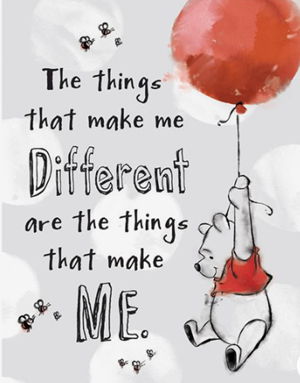
“PSHE education isn't just another school subject; it's a chance to give every child and young person an equal opportunity to develop the skills and knowledge they need to thrive now and, in the future, providing a 'curriculum for life' that connects academic success with personal health and well-being.” — PSHE Association
“Today’s children and young people are growing up in an increasingly complex world and living their lives seamlessly on and offline. This presents many positive and exciting opportunities, but also challenges and risks. In this environment, children and young people need to know how to be safe and healthy, and how to manage their academic, personal and social lives in a positive way.”
“I want to make sure that our children are able to grow up to become happy and well-rounded individuals who know how to deal with the challenges of the modern world. Part of this is making sure they are informed about how to keep themselves safe and healthy and have good relationships with others. [...] Good physical and mental health is also at the heart of ensuring young people are ready for the adult world. By making health education compulsory we are giving young people the tools they need to be ready to thrive when they leave school.” — Secretary of State for Education
OUR ETHOS FOR THE SUBJECT
Establishing a safe learning environment for both pupils and adult staff in the classroom is especially important for PSHE education lessons. A classroom with a safe learning environment protects pupils from any possible distress; enables them to feel comfortable about sharing feelings; able to explore values and attitudes; express their own opinions and consider the views and opinions of others, without the fear of negative feedback.
To embrace the challenges of creating a happy and successful adult life, pupils need knowledge that will enable them to make informed decisions about their wellbeing, health and relationships and to build their self-efficacy. Pupils can also put this knowledge into practice as they develop the capacity to make sound decisions when facing risks, challenges and complex contexts. Everyone faces difficult situations in their lives. These subjects can support young people to develop resilience, to know how and when to ask for help, and to know where to access support.
High quality, evidence-based and age-appropriate teaching of these subjects can help prepare pupils for the opportunities, responsibilities and experiences of adult life. They can also enable schools to promote the spiritual, moral, social, cultural, mental and physical development of pupils, at school and in society.
10 Principles of Effective PSHE Education:
- Start where children and young people are: find out what they already know, understand, are able to do, and are able to say. For maximum impact, involve them in the planning of your PSHE education programme.
- Plan a ‘spiral programme’ which introduces new and more challenging learning, while building on what has gone before, which reflects and meets the personal developmental needs of the children and young people.
- Take a positive approach which does not attempt to induce shock or guilt but focuses on what children and young people can do to keep themselves and others healthy and safe and to lead happy and fulfilling lives.
- Offer a wide variety of teaching and learning styles within PSHE education, with an emphasis on interactive learning and the teacher as facilitator.
- Provide information which is realistic and relevant and which reinforces positive social norms.
- Encourage young people to reflect on their learning and the progress they have made, and to transfer what they have learned to say and to do from one school subject to another, and from school to their lives in the wider community.
- Recognise that the PSHE education programme is just one part of what a school can do to help a child to develop the knowledge, skills, attitudes and understanding they need to fulfil their potential. Link the PSHE education programme to other whole school approaches, to pastoral support, and provide a setting where the responsible choice becomes the easy choice. Encourage staff, families and the wider community to get involved.
- Embed PSHE education within other efforts to ensure children and young people have positive relationships with adults, feel valued and where those who are most vulnerable are identified and supported.
- Provide opportunities for children and young people to make real decisions about their lives, to take part in activities which simulate adult choices and where they can demonstrate their ability to take responsibility for their decisions.
- Provide a safe and supportive learning environment where children and young people can develop the confidence to ask questions, challenge the information they are offered, draw on their own experience, express their views and opinions and put what they have learned into practice in their own lives.
OUR AIMS FOR THE SUBJECT
The overarching objectives of our PSHE and RSHE curriculum at Melling Primary School are to:
- Foster Personal Wellbeing & Mental Health: Equip children with emotional literacy, self-regulation techniques, and coping tools to build personal resilience, positive mental health, and self-efficacy.
- Build Healthy, Safe Relationships: Teach the foundational values of respect, kindness, consent, personal boundaries, and communication needed to form and maintain safe, positive relationships with family, peers, online connections, and the wider community.
- Promote Physical Health & Lifelong Safety: Provide clear, age-appropriate, factually accurate guidance regarding healthy lifestyle choices, physical growth, hygiene, body changes, personal safety (including road, rail, water, and fire safety), and the risks associated with substance use, including vaping and nicotine.
- Embed Social Signature Values: Drive local and secondary-transition readiness through the core pillars of Aspire, Achieve, and Enjoy, developing active, respectful, and economically aware citizens ready to contribute positively to society.
- Celebrate Diversity, Equality & Inclusion: Ensure all pupils understand equality, challenge harmful stereotypes, appreciate family diversity (including same-sex parents and non-traditional family structures), and respect the protected characteristics under the Equality Act 2010.
- Prepare for Adult Life & Transition: Develop essential life skills, digital literacy, financial capability, and safeguarding knowledge (via our Keep Safe Curriculum) to empower pupils to navigate challenges both on and offline confidently and safely.
HIGH QUALITY TEACHING
PSHE/RSHE is delivered through a weekly myHappymind lesson by class teachers, who are well-placed to provide a consistent, trusted, and supportive environment in which pupils feel safe to learn and ask questions.
We use the myHappymind Plus programme, which provides comprehensive coverage of the PSHE Association Programme of Study and supports the delivery of statutory Relationships and Health Education through a progressive, age-appropriate curriculum. Learning is carefully sequenced to build on prior knowledge and develop pupils' understanding and skills as they move through the school.
myHappymind Plus is delivered via an innovative learning platform that combines interactive lessons with the use of journals and worksheets for reflection and recording. Lessons are inclusive and adapted where appropriate to meet the needs of all pupils, including those with SEND. Staff receive regular safeguarding and RSHE training and are aware of the procedures for responding to any concerns or disclosures that may arise during lessons. Any safeguarding concerns are managed in line with our school's safeguarding policy and are reported promptly to the DSL to ensure pupils receive the support they need.
For each year group, objectives from the PSHE Association are mapped to myHappymind and myHappymind Plus lessons, enabling teachers to track which pupils are achieving, working towards, or exceeding objectives. These assessments are used in line with our assessment policy to monitor progress across lessons and modules.
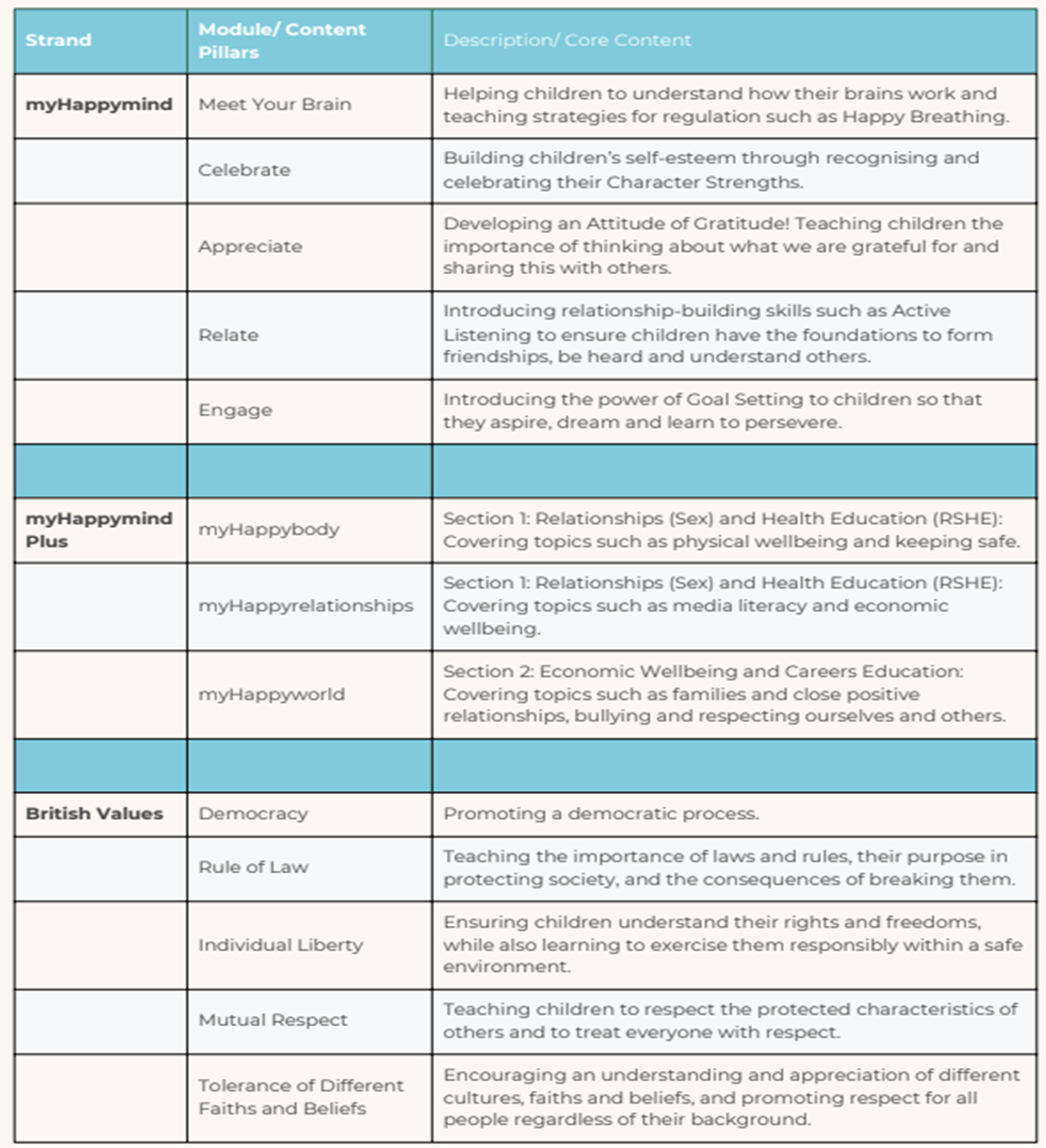
Overview of myHappymind Modules, Plus Themes, and British Values:
Ground Rules in the Classroom
We use good practice to work with pupils to establish ground rules about how they will behave towards each other during discussion. Ground rules help to minimise unintended disclosures, disclosures at inappropriate times, or comments of a negative nature made towards other pupils (whether intentional or not). Such ground rules support broader class rules and the school’s behaviour policy.
Examples of ground rules include:
- We will listen to others and respect what people say.
- We will not ask personal questions or put people ‘on the spot’.
- We will not make assumptions about other people, their experiences, or feelings.
- We have the right to ‘pass’ if we do not wish to comment.
- We will keep the conversation in the room (unless our teacher is concerned for our safety or wellbeing, when they may need to tell someone else to help us).
- We know we can ask for further information, help, or advice during or after the lesson.
The Importance of 'Distancing' the Learning
To ‘distance’ the learning means to put the learning in the third person and to ensure that pupils are not encouraged to talk about their own or others’ private experiences and personal examples.
When learning is distanced, pupils are more able to engage with and discuss issues (especially those that may be more sensitive and controversial). When pupils feel put-on-the-spot and asked to reflect on and share their own experiences, they may feel strong emotions that hinder the ability to learn from or derive meaning and insight from the example.
It is therefore safer and more effective to help pupils to think about someone other than themselves, someone ‘like them’ — for example, a simple profile of a child about their age, who goes to a school like theirs. Pupils will then gain more from discussing questions like ‘what might they think, feel, do?’ and giving advice to characters in the role of a friend, sibling, classmate, agony aunt, or uncle.
Organising Class Discussion and Sharing of Views
Discussion will be encouraged but set within a structured approach that enables participation, analysis, and reflection. This is often achieved by providing a scenario or sorting activity to focus pupil discussions.
There will be a shared understanding of terminology. For example, when learning about the human body, correct, accurate biological anatomical terminology (including genitalia) will be used to build body confidence, support safeguarding, and reduce stigma.
Pupils will have access to balanced, factually neutral information and differing views to help them clarify their own opinions (while making it clear that behaviour such as racism, discrimination, and bullying are never acceptable in any form).
We will be aware that some questions posed to the whole class may facilitate responses that touch on sensitive issues or result in the sharing of inappropriate information with others. We will always remind pupils of the agreed rules around what is appropriate to share with the whole class when they are responding to discussion questions.
If a pupil expresses uncomfortable, discriminatory, or extremist views, we will challenge the attitudes rather than the pupil, and remind them that these attitudes are unacceptable in school. If we are concerned by what is said or inferred, it will be reported to our Designated Safeguarding Lead (DSL).
Managing Hot Seating and Role Play Effectively
When these teaching methods are used in PSHE education, teachers will take care not to inadvertently inspire, provide instruction in, or enable pupils to rehearse unhealthy or unsafe behaviours. It is best in the first instance to demonstrate by taking on a role in the hot seat or role play scenario and ensure that information about the character or scenario is carefully selected and presented.
When acting in role play, pupils take on the role of a fictional character. It is useful to provide a prop or item of clothing (such as a hat) to signify they are in character as someone else. Pupils should never role play themselves.
Once the activity has been completed, it is important for pupils to get out of character, or de-role. You can do this by asking the pupil(s) to shake the character off physically through a range of physical exercises and movements (e.g. shaking the arms or legs or removing the item of clothing) and stating that by doing this, they are no longer the character.
Handling Pupils’ Questions
Questions from pupils should be encouraged in PSHE education lessons; we will be prepared to provide effective responses to questions raised by pupils. Most questions can be answered with short, simple answers, but in all cases, we make sure answers are factually correct, non-judgemental, and in line with school policies. If the question asked is age-appropriate and will help move the learning along, we may pause the lesson and discuss the question as a class, or in small groups who can report back. If necessary, we will use distancing techniques to desensitise the issue by turning it into a more general example. However, sometimes a pupil may ask a question that’s sensitive, hard to answer, embarrassing, or inappropriate for their age and the setting. If this happens we may:
- Remind the pupil and the group of our ground rules and ask them what they think might be the right thing to do in response to the question.
- Ask the question back to the pupil or pupils to ascertain their current understanding or misconceptions.
- ‘Park’ the question: This is a useful technique that gives time to consider how best to respond. We may explain that it will be answered later, once the teacher has had the chance to research an appropriate response. This ‘park the question’ technique is vital for questions that are inappropriate or which may raise potential child protection issues, which may lead to involving our school’s designated safeguarding lead.
- Explain that the question goes beyond the learning outcomes of the lesson today and explain pupils will learn more about this as they get older.
- Refer pupils to parents/carers to discuss a question. It is good practice to talk to the pupil(s) concerned before involving a parent or carer to explain that it is in their best interests to talk to their parent(s) or a trusted adult. If a child refuses or rejects talking to their parent or carer, depending on the question, this should be taken seriously and discussed with the head/designated safeguarding lead and acted upon in accordance with the school’s confidentiality policy.
In PSHE education lessons, we make a question box/bag or ‘Ask-it Basket’ available in which pupils can place anonymous questions or concerns. This enables pupils to ask questions with anonymity and without embarrassment.
Key points for pupils about using an anonymous questions box:
- Anyone can use it to post a question, at any time and as many times as they want.
- Questions can be anonymous, or they can put their name on their question so the teacher can follow it up with them individually.
- Only the teacher will see the questions, unless there are significant issues regarding a pupil’s safety or wellbeing that need to be shared with others.
- Questions raised will be dealt with in the following lesson (or sooner if relevant to a pupil’s safety and wellbeing). Depending on the nature of the question, some responses may be answered as part of a small group session or one-to-one and will be treated anonymously so no one knows who asked the original question.
Signposting Support
It is important to link PSHE education with the whole-school approach to supporting pupil wellbeing. All pupils will be made aware of sources of support both inside and outside the school that they can easily access so that they feel able to ask for more help, advice, and support if they want to.
PRINCIPLES OF THE PROGRAMME
At Melling Primary, we use the myHappymind programme to deliver our core PSHE sessions from Reception through to Year 6.
Meet Your Brain
This module is focused on giving children a foundational knowledge of the brain and teaching them how they can look after their minds to be at their very best. It is critical that the children understand the following key concepts/topic areas by the end of this module as they form a key component of the CARE (Celebrate, Appreciate, Relate, Engage) model that follows.
- Your brain and your mind are different: Children learn that their brain is an organ and that it has many functions. They learn that the brain controls most of what we do and that it is an amazing thing! Children learn that they can choose what to focus their mind on, and recognise that concentrating on learning something new helps their brain remember and grow.
- Neuroplasticity: Children learn the concept of Neuroplasticity—i.e. that the brain can grow and change when you practise and work on something. When we do something or learn something, Neural Pathways are created in our brain. Each time we repeat the activity, the Neural Pathway or connection is made stronger and it gets easier for us to complete the activity.
TEAM H-A-P:
The children learn about three key parts of their brain: the Hippocampus, the Amygdala, and the Prefrontal Cortex. We call them Team H-A-P for short and they each have a special role:
- Hippocampus: Like a scrapbook storing our memories and things that we learn.
- Amygdala: Reacts to keep us safe when there is danger. It cannot assess danger, though; it can only react if it senses it by Fight, Flight, or Freeze!
- Prefrontal Cortex: Helps us to make decisions, understand different perspectives, solve problems, analyse, and make choices.
The key concept here is that we can be at our best when Team H-A-P are working together. When we feel stressed or worried, Team H-A-P cannot work well together and our Amygdala will take over and cause us to react (without thinking) rather than respond (assessing our actions before we take them). When we feel stressed, worried, or sense danger, the Amygdala takes over because oxygen is drained from the Hippocampus and Prefrontal Cortex and floods to our extremities. This causes the Fight, Flight, or Freeze response, which keeps us safe from danger. The children learn that, when this happens, the best thing that they can do is something called Happy Breathing. This is slow, calm breathing and is scientifically proven to help calm the mind, especially the Amygdala.
Not only do we have myHappymind for our core programme, but for our PSHE focus we have myHappymind Plus. This is made up of 3 core content pillars which run alongside the myHappymind programme:
- myHappybody: Core Theme 1 — Health & Wellbeing
- myHappyrelationships: Core Theme 2 — Relationships
- myHappyworld: Core Theme 3 — Living in the Wider World
By using myHappymind Plus, our school is fully compliant with the statutory DfE guidance for Relationships Education and Health Education. Additionally, the programme teaches non-statutory PSHE objectives, providing a well-rounded curriculum.
Safeguarding principles are embedded throughout the curriculum and school practice. This includes learning about online safety, digital resilience, healthy relationships, consent, personal boundaries, recognising safe and unsafe situations, physical safety (water, road, rail, and fire safety), and emotional wellbeing.
Lessons are delivered in a safe, age-appropriate, neutral, and trauma-informed manner, ensuring pupils feel supported, respected, and able to seek help if needed. Staff are alert to safeguarding concerns that may arise during sessions and know how to respond in line with school procedures, including sharing information with the Designated Safeguarding Lead (DSL) when appropriate. Clear signposting ensures pupils know who they can talk to if they are worried or need support. Staff can refer to the myHappymind guidance on using the journals to ensure any potential safeguarding disclosures are not missed.
INCLUSION AND EQUALITY
Inclusion (SEND)
We will always ensure that the content, approach, and use of language are inclusive, reflect the diversity of the school community and society more widely, and help every pupil to feel valued and included in the classroom.
We will challenge stereotypes and avoid making assumptions—for example, that everyone has two parents (one male and one female), only men are able to do manual jobs, or all older people are inactive. As part of this, we ensure all teaching reflects a non-stereotypical world view of gender, age, disability, race, culture, religion, sex, or sexual orientation.
At Melling Primary, we see that ease of access to the PSHE/RSHE Curriculum is essential for all children. Teachers will adapt the curriculum and resources to ensure that children with Special Educational Needs and Disabilities (SEND) have full access and effective learning experiences tailored to their cognitive and emotional development.
Inclusion (Identity & Diverse Families)
For a child to thrive, school should be a place where everyone feels that they and their family are valued, and where the environment reflects the world in which they are growing up. We are all living in an increasingly diverse society, and today’s children are likely to have experiences of diverse family setups, including LGBTQ+ families, within their own families, friends, and through what they see in wider society and media.
To reflect this, in line with statutory guidance, Melling Primary ensures that the needs of all pupils are appropriately met and that all pupils understand the importance of equality and respect. This includes teaching about different family structures in an age-appropriate, sensitive manner—including single-parent families, same-sex parents/carers, grandparent-headed families, adoptive parents, and foster carers.
Schools have a statutory duty under the Equality Act 2010 to ensure that no child is discriminated against because of their protected characteristics. This includes proactively and appropriately addressing homophobic, transphobic, and biphobic (HTB) bullying or prejudice. Inclusivity is an overarching, fundamental ethos integrated sensitively across our curriculum to ensure our school represents all pupils and their families respectfully.
ROLES AND RESPONSIBILITIES
The Headteacher and Senior Leadership Team are responsible for:
- Ensuring RSHE is delivered consistently and in line with current statutory guidance.
- Overseeing the implementation, monitoring, and review of the RSHE policy and curriculum.
- Making the RSHE policy and curriculum materials transparently available to parents and carers.
- Managing requests to withdraw pupils from the non-statutory elements of sex education.
- Ensuring staff receive appropriate RSHE, pedagogical, and safeguarding training.
- Promoting a whole-school approach to wellbeing, relationships, personal development, and safeguarding.
- Ensuring the curriculum is inclusive, non-partisan, age-appropriate, and accessible to all pupils, including those with SEND.
The PSHE/RSHE Lead is responsible for:
- Coordinating the delivery of the RSHE curriculum across the school.
- Supporting staff with planning, resources, and curriculum delivery.
- Monitoring the quality of teaching through lesson observations, learning walks, book/journal looks, and pupil voice.
- Reviewing the curriculum regularly to ensure it remains up to date with national statutory updates and local community needs.
- Identifying staff training needs and supporting ongoing professional development (CPD).
- Working with senior leaders to evaluate the impact of RSHE and identify areas for improvement.
Teachers are responsible for:
- Delivering RSHE in a safe, inclusive, objective, and sensitive way.
- Creating a positive learning environment where pupils feel confident to participate.
- Modelling respectful relationships and positive attitudes.
- Adapting teaching to meet the needs of all pupils, including SEND learners.
- Monitoring pupils' understanding and progress.
- Responding appropriately to pupils whose parents have requested withdrawal from non-statutory sex education.
- Following the school's safeguarding procedures and reporting any concerns or disclosures immediately to the Designated Safeguarding Lead (DSL).
- Completing appropriate RSHE and safeguarding training prior to delivering sensitive curriculum themes.
Pupils are expected to:
- Engage positively and actively in RSHE lessons.
- Listen respectfully to the views, feelings, and experiences of others.
- Treat everyone with kindness, respect, and sensitivity.
- Follow agreed classroom ground rules during discussions.
- Ask questions appropriately (including using the Ask-it Basket) and seek support from a trusted adult when needed.
- Apply their learning to keep themselves and others safe across both physical and digital environments.
WHOLE SCHOOL OVERVIEW OF CURRICULUM COVERED
At Melling Primary, we integrate myHappymind / myHappymind Plus, the National Curriculum for Science, and our Keep Safe Curriculum (including NSPCC PANTS, Ariel Trust, and community safety initiatives) to deliver full, progressive coverage across all key themes.
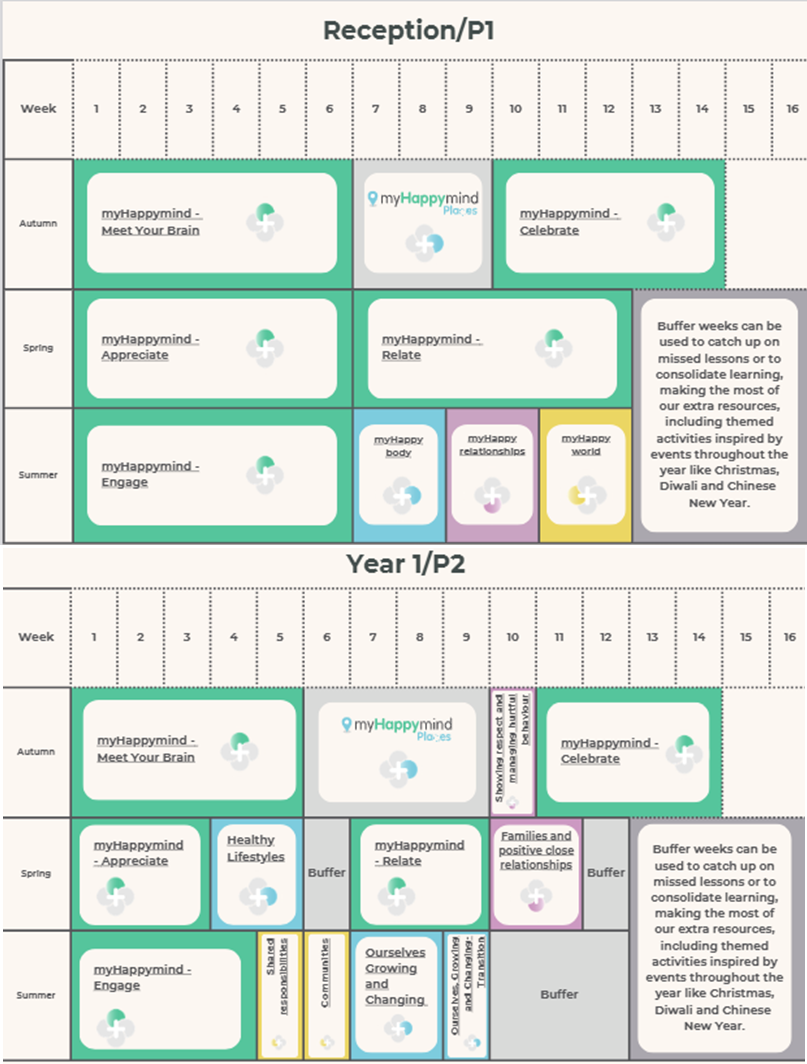
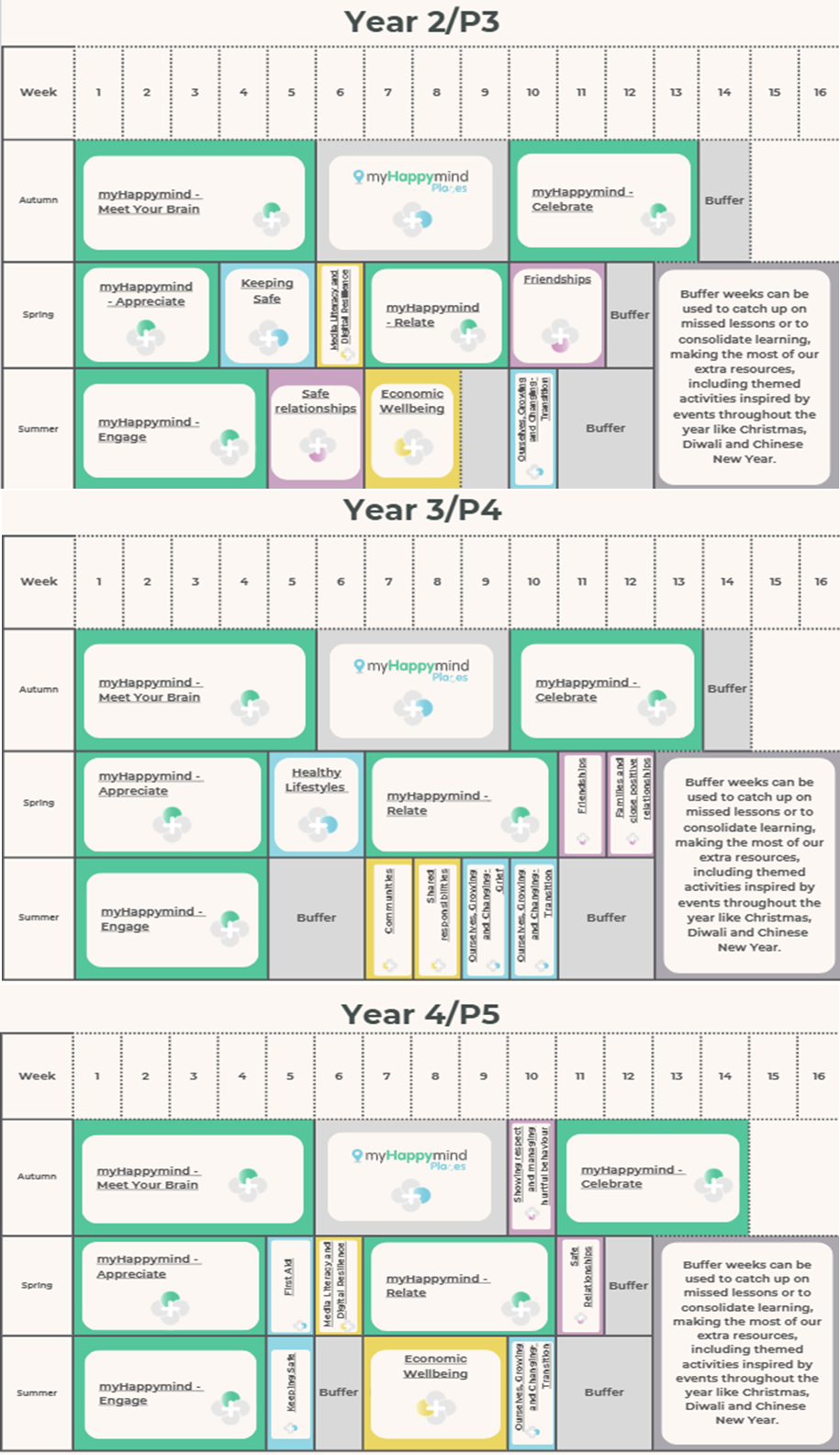
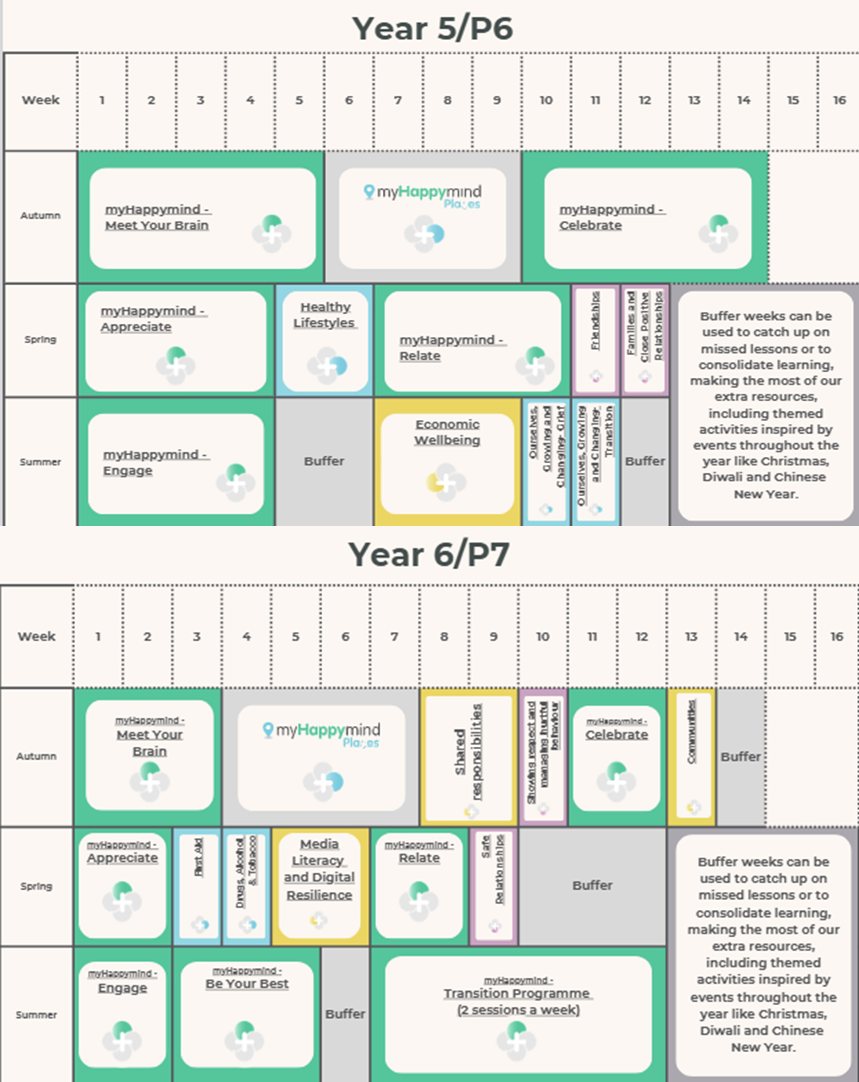
- myHappymind Core Modules: Green
- myHappybody (Health & Wellbeing): Blue
- myHappyrelationships (Relationships): Purple
- myHappyworld (Living in the Wider World): Yellow
The myHappymind Plus modules are written in Key Stages to align with national requirements. They are flexible and can be adapted to meet the specific developmental needs of each cohort while maintaining full coverage of essential statutory outcomes.
MELLING PRIMARY TOPIC DELIVERY OVERVIEW: PSHE, SCIENCE & KEEP SAFE CURRICULUM
|
Year Group |
Science Curriculum (Statutory) |
Keep Safe Curriculum (NSPCC / Ariel Trust / Safety Partners) |
|
Year 1 |
• Identify, name, draw, and label basic parts of the human body; identify senses. |
NSPCC PANTS Rule: Privates are private; Always remember your body belongs to you; No means no; Talk about secrets that upset you; Speak up—someone can help. |
|
Year 2 |
• Notice animals/humans have offspring growing into adults. • Basic needs for survival (water, food, air). • Importance of exercise, balanced diet, and hygiene. |
NSPCC PANTS Rule: Revisit bodily autonomy, correct terminology, and identifying trusted adults. Personal Safety: Basic road and fire safety awareness. |
|
Year 3 |
• Nutrition requirements in humans and animals. • Skeletons and muscles for support, protection, and movement. |
NSPCC PANTS Rule: Reinforced boundary setting and safe vs unsafe secrets. Personal Safety: Water safety awareness and community safety basics. |
|
Year 4 |
• Functions of basic human digestive system parts. • Human teeth types and functions. • Food chains, producers, predators, prey. |
Ariel Trust Cyber Skills: Recognising cyberbullying, managing online communication, and safe social media habits. |
|
Year 5 |
• Life cycles of mammals, amphibians, insects, birds. • Reproduction processes in plants and animals. • Changes as humans develop to old age, including puberty (enabling adult reproduction). |
Ariel Trust Safe Skills: Grooming awareness, controlling behaviours, and healthy peer boundary setting. Substance Safety: Vaping, nicotine, and smoking risk awareness. |
|
Year 6 |
• Main parts of human circulatory system (heart, blood vessels, blood). • Impact of diet, exercise, drugs, alcohol, and lifestyle on body function. • Transport of nutrients and water. |
Ariel Trust: ‘Grassing or Grooming’ (peer pressure/exploitation). Get Away n Stay Safe (GASS): Gang, knife, and exploitation awareness. Travel Safety: Rail, road, and water safety training. |
Curriculum Enhancement & Keep Safe Initiatives
Our PSHE and RSHE curriculum is significantly enhanced throughout the academic year by targeted assemblies, workshops, visitor experiences, and collaborative partnerships:
- Whole-School & Key Stage Assemblies: Cover contemporary local/global issues, calendar events, anti-bullying themes, and spiritual, moral, social, and cultural (SMSC) topics.
- Keep Safe Curriculum Partners:
- NSPCC: Regular delivery of the Speak Out. Stay Safe. assembly and PANTS rule workshops.
- Bullybusters: Interactive anti-bullying and peer support workshops.
- Ariel Trust: Digital literacy, online safety, grooming prevention, and controlling relationship awareness programs.
- Get Away n Stay Safe (GASS): Specialist Year 6 gang awareness, anti-exploitation, and decision-making training.
- NHS School Nurse Team: Delivery of Year 6 emotional wellbeing, mental health transition, and physical hygiene/puberty sessions.
- Emergency & Community Services Safety: Structured age-appropriate modules on Water Safety, Road Safety, Rail Safety, and Fire Safety in line with statutory personal safety guidance.
Integration of the 'Social Signature' Areas
To ensure our pupils develop into well-rounded, ambitious, and civic-minded young people—and to foster seamless continuity with local secondary pathways (including Maghull High School)—our PSHE/RSHE provision embeds the core Social Signature areas across all key stages:
- ASPIRE:
- Developing high personal ambitions, self-efficacy, and a positive growth mindset through the myHappymind Engage module.
- Introducing career awareness, economic wellbeing, and future possibilities from early primary stages, encouraging every child to recognise their unique potential.
- ACHIEVE:
- Fostering academic resilience, focus, and critical thinking skills using Team H-A-P self-regulation strategies.
- Empowering children to set realistic goals, reflect on personal progress, and take pride in individual and collective successes.
- ENJOY:
- Nurturing positive mental health, gratitude, self-esteem, and joyful engagement with school life through myHappymind Celebrate and Appreciate modules.
- Ensuring every child feels safe, valued, and excited to participate in a supportive, vibrant school community.
- FINANCIAL EDUCATION:
- Delivering age-appropriate financial literacy, teaching children about money, budgeting, saving, prioritising spending, and understanding the role of money in everyday life.
- CITIZENSHIP & BRITISH VALUES:
- Developing an understanding of community, democratic processes, rights, responsibilities, and the Rule of Law.
- Actively promoting tolerance, individual liberty, and mutual respect while celebrating societal diversity.
ASSESSMENT OF SUBJECT
At the end of each topic covered, children have the opportunity to give their teacher feedback about what they have learned and enjoyed most about the specific topic. The subject lead also speaks to groups of children throughout the year (pupil voice) to discuss what has been covered and reflect on their learning journey.
During each session, teachers monitor and note the completion of topics, recording achievements in line with learning objectives. Teachers identify pupils who may be working towards expected outcomes as well as those working at greater depth. The majority of assessment is formative and embedded within weekly sessions through structured discussions, group work, paired reflections, and problem-solving scenarios.
The children use individual myHappymind Journals during weekly core sessions. These journals are personal reflection spaces where children can express themselves freely through writing paragraphs, listing bullet points, or drawing illustrations based on reflective prompts. Whole-class reflection questions are shared on the board, following which children record their personal responses.
ACHIEVEMENT IN THAT SUBJECT
Happiness Heroes
Each class selects dedicated pupil ambassadors known as Happiness Heroes. In Key Stage 1, three Year 2 representatives represent the key stage. In Key Stage 2, we have 2 from each year group. These ambassadors act as the pupil voice for mental health and wellbeing in their classrooms. They take immense pride in their roles, ensuring peers know who to talk to if worried and liaising directly with the subject lead and class teachers to foster a caring, supportive school culture.
Accreditation
Melling Primary actively participates in the myHappymind Accreditation framework. This opportunity allows pupils and staff to showcase how effectively the myHappymind approach is embedded across school life, demonstrating our school-wide commitment to sustainable mental health and wellbeing.
PARENTAL SUPPORT FOR THE SUBJECT
We are committed to working in partnership with families by providing clear, accessible information about our PSHE/RSHE curriculum and ensuring parents have full transparency and opportunities to engage.
Our PSHE policy and scheme of work are readily available on the school website. We provide annual parental information sessions and consultation opportunities. Parents are welcome to contact the school at any time to discuss the curriculum or view teaching materials. Where non-statutory sex education is delivered (Year 6), parents are notified in advance and consulted. Parents maintain the legal right to request that their child be withdrawn from non-statutory sex education lessons.
MyHappymind Parent App & Mini Masterclasses
Through the free myHappymind Parent App, families can access resources to reinforce key strategies (such as Happy Breathing) at home. The app includes a series of Mini Masterclasses designed to assist parents with common childhood challenges:
- Separation Anxiety: Understanding separation anxiety and gaining practical tips to make goodbyes manageable while building confidence.
- Emotionally Based School Avoidance (EBSA): Guidance on supporting children experiencing school-related anxiety through structure and reassurance.
- Building Self-Esteem: Practical ways to nurture strengths, boost confidence, and foster self-worth.
- Managing Big Emotions: Explaining brain science (Team H-A-P and Fight/Flight/Freeze) during moments of stress or meltdowns, enabling parents to use consistent self-regulation techniques at home.
- Neurodiversity: Celebrating how children think, learn, and process the world differently, offering advice on home support.
All curriculum resources comply strictly with:
- This Policy
- The Teachers’ Standards
- The Equality Act 2010
- The Human Rights Act 1998
- The Education Act 1996
DETAILED RSHE STATUTORY CONTENT SPECIFICATION
Relationships Education (Statutory - End of Primary Expectations)
1. Families and People Who Care for Me
Pupils will be taught:
- That families are important for children growing up because they can give love, security, and stability.
- The characteristics of a healthy, family life, commitment to each other, including in times of difficulty, protection and care for children and other family members, the importance of spending time together and sharing laughter and stories.
- That others’ families, either in school or in the wider world, sometimes look different from their family, but that they should respect those differences and know that other children’s families are also characterised by love and care (including single parents, same-sex parents, adoptive parents, foster carers, and grandparents).
- That stable, caring relationships are the foundation of good development and security for children.
- How to recognise if family relationships are making them feel unhappy or unsafe, and how to seek help or advice from their teacher or another adult.
2. Caring Friendships
Pupils will be taught:
- How important friendships are in making us feel happy and secure, and how people choose and make friends.
- That healthy friendships are positive and welcoming towards others, and do not make others feel lonely or excluded.
- That not every child will have the friends they would like at all times, that most people feel lonely sometimes, and that there is no shame in feeling lonely or talking about it.
- How to choose, make, and maintain healthy friendships, recognising mutual respect, trust, trustworthiness, loyalty, kindness, generosity, boundaries, and support.
- How to manage conflict with kindness, communicate effectively, resolve disputes, and apologise when appropriate.
3. Respectful Relationships
Pupils will be taught:
- The importance of respecting others, even when they are very different from them (for example, physically, in personality, background or making different choices or having different beliefs).
- Practical steps they can take in a range of different contexts to improve or support respectful relationships.
- The conventions of courtesy and manners.
- The importance of self-respect and how this links to their own happiness.
- What tolerance requires, including tolerance of other people's beliefs.
- That in school and in wider society they can expect to be treated with respect by others, and that in turn they should show respect to others, including those in positions of authority.
- About different types of bullying (including cyberbullying), the impact of bullying, responsibilities of bystanders (reporting bullying to an adult), and how to get help.
- What a stereotype is, and how stereotypes (e.g. based on sex, gender, race, disability) can cause harm and prejudice.
4. Online Relationships
Pupils will be taught:
- That the same principles apply to online relationships as to face-to-face relationships, including the importance of respect for others online including when we are anonymous.
- The rules and principles for keeping safe online, how to recognise risks, harmful content and contact, and how to report them.
- How to critically consider their online friendships and sources of information including awareness of the risks associated with people they have never met.
- How information and data is shared and used online.
5. Being Safe
Pupils will be taught:
- What sorts of boundaries are appropriate in friendships with peers and others (including in a digital context).
- About the concept of privacy and the implications of it for both children and adults; including that it is not always right to keep secrets if they relate to being safe.
- That each person’s body belongs to them, and the rights to bodily boundaries and privacy (NSPCC PANTS).
- How to respond safely and appropriately to adults they may encounter (in all contexts, including online) whom they do not know.
- How to recognise and report feeling unsafe or feeling bad about any adult or peer relationship, and how to ask for help.
- Essential personal safety awareness, including road safety, water safety, rail safety, and fire safety.
Health Education (Statutory - End of Primary Expectations)
1. Mental Wellbeing
Pupils will be taught:
- That mental wellbeing is a normal part of daily life, in the same way as physical health.
- That there is a normal range of emotions (e.g. happiness, sadness, anger, fear, surprise, nervousness) and scale of feelings that all humans experience in relation to different experiences and situations.
- How to recognise and talk about their emotions, including having a varied vocabulary of words to use in relation to their own and others’ feelings.
- How to judge whether what they are feeling and how they are behaving is appropriate and proportionate.
- The benefits of physical exercise, time outdoors, community participation, voluntary and service-based activity on mental wellbeing and happiness.
- Simple self-care techniques, including the importance of rest, time spent with friends and family, and the myHappymind Happy Breathing technique.
- Isolation and loneliness can affect children and that it is very important for children to discuss their feelings with an adult and seek support.
2. Internet Safety and Harms
Pupils will be taught:
- That for most people the internet is an integral part of life and has many benefits.
- About the benefits of rationing time spent online, the risks of excessive screen time on physical and mental health.
- How to consider the effect of their online actions on others and know how to recognise and display respectful behaviour online.
- Why social media, some computer games and online media can be age-restricted.
- That the internet can present a distorted picture of the world and normalise or glamorise behaviours which are unhealthy and wrong.
3. Physical Health, Fitness, and Healthy Eating
Pupils will be taught:
- The characteristics and mental and physical benefits of an active lifestyle.
- The importance of building regular exercise into daily and weekly routines.
- What constitutes a healthy diet (including understanding calories and nutritional content).
- The principles of planning and preparing a range of healthy meals.
- The characteristics of a poor diet and risks associated with unhealthy eating.
4. Drugs, Alcohol, Tobacco, and Vaping
Pupils will be taught:
- The facts about legal and illegal substances, including alcohol, tobacco, medicines, and volatile substances.
- Clear, age-appropriate facts regarding vaping and nicotine addiction, recognising that vapes are harmful, age-restricted, and carry health risks.
5. Health and Prevention
Pupils will be taught:
- How to recognise early signs of physical illness, such as weight loss, fever, or skin changes.
- About safe and unsafe exposure to the sun, and how to reduce the risk of sun damage.
- The importance of sufficient good quality sleep for growth, health, and concentration.
- About dental health and the benefits of good oral hygiene and regular check-ups.
- About personal hygiene and germs including microbes, the spread, prevention and treatment of skin infection and viruses.
6. Basic First Aid
Pupils will be taught:
- How to make a clear and efficient call to emergency services if necessary.
- Concepts of basic first aid, for example dealing with common injuries, head injuries, burns, cuts, and bleeding.
- Basic life-saving skills including basic CPR concepts in Upper Key Stage 2.
7. Changing Adolescent Body (Puberty)
Pupils will be taught:
- Key facts about puberty and the changing adolescent body, particularly from Year 5 onwards, including physical and emotional changes.
- About menstrual wellbeing including the key facts concerning the menstrual cycle.
- Correct biological anatomical terminology for body parts, including genitalia.
SEX EDUCATION POLICY & IMPLEMENTATION
Statutory Science Content (Compulsory)
All primary schools are mandated to deliver the statutory National Curriculum for Science. At Melling Primary, this includes:
- Naming external body parts (Year 1 & Year 2).
- Human growth and life cycles from birth to old age, including the physical and biological changes associated with puberty (Year 5).
- Plant and animal reproduction processes (Year 5).
Because this content is statutory under the National Curriculum for Science, parents do not have the right to withdraw their children from these lessons.
Non-Statutory Sex Education (Year 6)
Sex Education beyond statutory Science is non-statutory in primary education. At Melling Primary, we deliver a discrete unit on Human Reproduction in Year 6.
Content covered in Year 6 non-statutory Sex Education:
- Human reproduction in the context of the human lifecycle.
- How a baby is conceived and grows.
- The roles and responsibilities of parents and carers.
- Identifying links between love, committed relationships, and conception.
- Correctly naming male and female body parts associated with conception.
- Explaining that a baby is made when a male sperm fertilises a female egg/ovum, which settles into the lining of the womb.
- Explaining in simple, age-appropriate terms what sexual intercourse is and that it can be one part of an intimate relationship between consenting adults.
- Explaining the concept of mutual consent in adult relationships.
- Explaining pregnancy, gestation duration, and how having a baby changes lifestyle responsibilities.
Parental Right to Withdraw
Before Year 6 Sex Education is taught, parents and carers are formally notified in writing and offered consultation. Parents have the legal right to request that their child be withdrawn from non-statutory sex education lessons. If a parent requests withdrawal, the Headteacher will discuss the request with the parent to ensure their wishes are understood and respected. Pupils who are withdrawn are provided with purposeful, alternative learning during those specific sessions.
IMPLEMENTATION — QUALITY FIRST APPROACH
Melling Primary School adopts a Quality First Teaching approach to PSHE and RSHE delivery. Teachers utilise inclusive, interactive, and reflective pedagogical strategies to ensure every child builds self-efficacy, emotional resilience, personal safety skills, and respectful attitudes. Through the seamless combination of myHappymind, myHappymind Plus, the Keep Safe Curriculum, and Social Signature pillars, we ensure our children are fully prepared to thrive in primary school, secondary transition, and modern society.