
DESIGN TECHNOLOGY
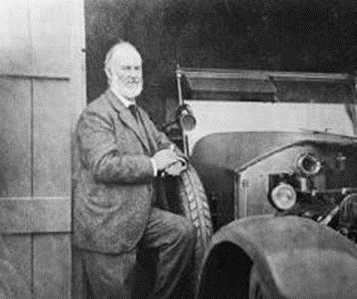
"Strive for perfection in everything you do. Take the best that exists and make it better. When it does not exist, design it." Sir Henry Royce
ETHOS
Design and Technology is an inspiring, rigorous and practical subject. Pupils design and make products, within a variety of contexts, using creativity and imagination, considering their own and others’ needs, wants and values. In all areas of Design and Technology the children are encouraged to consider the effectiveness of their designs and products, experiencing and applying skills in a range of projects. Children will develop their cooking and food preparation skills and will be taught how to apply the principles of nutrition and healthy eating through planned COOKING AND NUTRITION units. Children will also complete a range of projects in MECHANISMS, STRUCTURES, TEXTILES, ELECTRICAL SYSTEMS and DIGITAL WORLD units.
AIMS
• to deliver programmes of study for E.Y.F.S. and Key Stages 1 and 2 of the National Curriculum in Design and Technology
• to develop imaginative thinking in children and to enable them to talk about what they like and dislike when designing and making
• to enable children to talk about how things work and to draw and model their ideas
• to develop the creative, technical and practical expertise needed to perform everyday tasks confidently to encourage children to select and use appropriate tools and techniques for making a product, whilst following safe procedures
• to explore attitudes towards the made world and how we live and work within it
• to develop an understanding of technological processes, products, and their manufacture, and their contribution to our society
• to foster enjoyment, satisfaction and purpose in designing and making
HIGH QUALITY APPROACH
At Melling, the Design and Technology curriculum is structured around four strands that run through every unit:
• Design
• Make
• Evaluate
• Technical knowledge
These strands ensure a balanced coverage of the substantive, disciplinary and procedural knowledge pupils need to progress in Design and technology. They support the development of creativity, problem-solving and technical understanding, preparing pupils to design purposeful, functional products with increasing independence and confidence.
The knowledge that underpins learning in Design and Technology:
• Substantive knowledge – the factual and conceptual understanding that underpins the design and creation of products, such as knowing how structures gain stability or how nutrients contribute to a healthy diet.
• Disciplinary knowledge – the thinking processes used by designers, including how problems are explored, decisions are justified and ideas are refined through evaluation and feedback.
• Procedural knowledge – the practical skills and techniques pupils need to make products effectively and safely, such as joining, cutting, shaping or finishing.
Children will complete a variety of projects during which they will design, make and evaluate a range of products. Children will also build up a range of technical knowledge and a wide technical vocabulary, enabling them to confidently talk about their own and other’s products. Lessons will be blocked into units and these will be completed termly. Children will also be taught how to cook and apply the principles of nutrition and healthy eating. In Food Technology activities, children will be taught a valuable life skill, whilst being given opportunities to express themselves creatively. Cooking and Nutrition units will be blocked but further opportunities will be provided for children throughout the school year, for example, at Christmas and Easter time.
PROGRESSION AND COVERAGE
COVERAGE
In addition to topic themed work, teachers use the KAPOW programme of study. All the work planned for D.T. at Melling aims to nurture the aspirations of children to develop exciting, innovative projects in a series of engaging hands on activities. Our Design and Technology scheme of work aims to inspire pupils to become curious, creative and innovative thinkers with a broad understanding of how products are designed and made, in other words, to think like designers and engineers. The intention is for pupils to develop the confidence to identify problems, generate ideas, plan and create products and evaluate their outcomes. Projects aim to raise pupils’ awareness of how design and technology shape the way they live, work and interact with the world. It encourages pupils to become resourceful, enterprising individuals who have the skills to contribute to and improve the world around them.
• Cooking and nutrition: discovering where food comes from; creating a balanced diet; following kitchen hygiene and safety; developing preparation and cooking skills; following a recipe.
• Mechanisms: using cams, followers, levers and sliders to mimic natural movements.
• Structures: learning about the properties of materials; improving a structure’s strength and stability; reinforcing structures.
• Textiles: using fabric techniques to fasten, sew and decorate.
• Electrical systems: creating electrical products using series circuits, circuit components, circuit diagrams and symbols.
• Digital world: programming products to perform tasks; developing 2D and 3D designs and models using CAD software.
PROGRESSION
Pupils demonstrate their learning and provide tangible evidence of progress through a variety of activities, including structured written work, annotated diagrams and creative responses. Lessons encourage discussion, reflection and verbal explanations. This allows teachers to capture pupils’ understanding through questioning, class discussions and recorded responses, supporting a broader view of progress beyond written work.
SEND
Children learn in a variety of ways. As such, Design Technology lessons include a range of strategies to support and challenge every pupil, including:
• Scaffolding – activities are designed with flexibility in mind, allowing for additional support or challenge where needed.
• Multi-sensory approaches – lessons incorporate different elements to engage all learners.
• Clear instructions and structured tasks – ensuring clarity and reducing cognitive load for pupils who benefit from additional support.
• Opportunities for collaborative and independent learning – allowing pupils to work at their own pace while building confidence and independence.
• By embedding adaptive teaching throughout, all pupils, regardless of their starting points, can access and succeed in their learning.
ASSESSMENT
Formative assessment is embedded throughout Design Technology lessons to ensure that teachers can gauge pupils’ understanding in real time and adapt their teaching accordingly. Approaches used include:
• Questioning – Lesson include targeted and open-ended questions to check understanding, promote critical thinking and address misconceptions.
• Observation – Teachers observe pupils during tasks, noting how they approach activities, collaborate and apply design skills.
• Discussion and peer interaction – Pair and group discussions are built into lessons, providing opportunities for pupils to articulate their thinking and for teachers to assess understanding through dialogue.
• Lesson pauses – Strategic pause points for checking comprehension, summarising learning and addressing any common errors before progressing are a part of lessons.
• Retrieval practice – Recap activities, such as short recall tasks and oral explanations, are embedded to reinforce prior knowledge and assess retention.
• Use of success criteria – Success criteria are shared within lessons, allowing pupils to self-assess or peer-assess their work and reflect on their progress.
Summative assessment examines final outcomes of children’s projects. Once work has been completed, learning from units can be assessed in a variety of ways:
• Children’s understanding and retention of key knowledge can be assessed using an Assessment quiz with multiplechoice and open-ended questions. Depending on the needs of the cohort, Assessment quiz questions may be read aloud and completed in small groups or as a whole-class activity, rather than being completed independently.
• Each KAPOW unit includes a Knowledge catcher, which can be used at both the beginning and end of a unit to give children the opportunity to further demonstrate their understanding of the key concepts covered.
ACHIEVEMENT
Please look through the Melling Design and Technology Gallery Page for examples of the excellent work that children at Melling have been completing.
ORACY
Wherever possible, links will be made to oracy learning as children will be encouraged in their use of a range of vocabulary associated with the skills and knowledge they are building. Displays in school will reference key vocabulary as appropriate. Children will be expected to build up this bank of key vocabulary as they progress with their learning in D.T.
EQUALITY AND DIVERSITY
The D.T. curriculum is designed to be inclusive and representative, ensuring all pupils see themselves reflected in the products, users and contexts they explore. Lessons include a diverse range of design traditions, food, materials and technologies from around the world that encourage pupils to design with empathy and respect to a variety of users. This approach helps challenge stereotypes, broaden perspectives and celebrate design as a practical, creative and culturally-rich human endeavour.
LOCAL AREA REFLECTED
Links with a local supermarket help the children in their understanding of food technology and inspiration is taken from local built structures for projects, e.g. buildings in the community and playground equipment in the local park. Children also use the local area as context for their work, for example, prior to starting their Romans electrical posters project, Y3 children visit local city Chester and Romans museums there. Trips to local museums let children see real products and prototypes - from historical inventions to modern designs - allowing children to see the design process over time and providing context to some of their learning.
ENRICHMENT
In each year group, learning is enhanced through whole school Design Technology S.T.E.M. days, making those important links with the Computing curriculum. This will enable children to learn and apply their knowledge and skills devising algorithms to control models that they have constructed.
Melling Design Technology Gallery
Easter Gardens


Easter Bonnets


Combining Textiles for Christmas Decorations in Year 5


STEM CLUB in Year 3
Pop-up Paper Technology in Year 3


Great Fire of London Bread Making in Year 2


Pizza Making in Year 1


Using Construction Equipment in Year 1


Reception

