MATHEMATICS
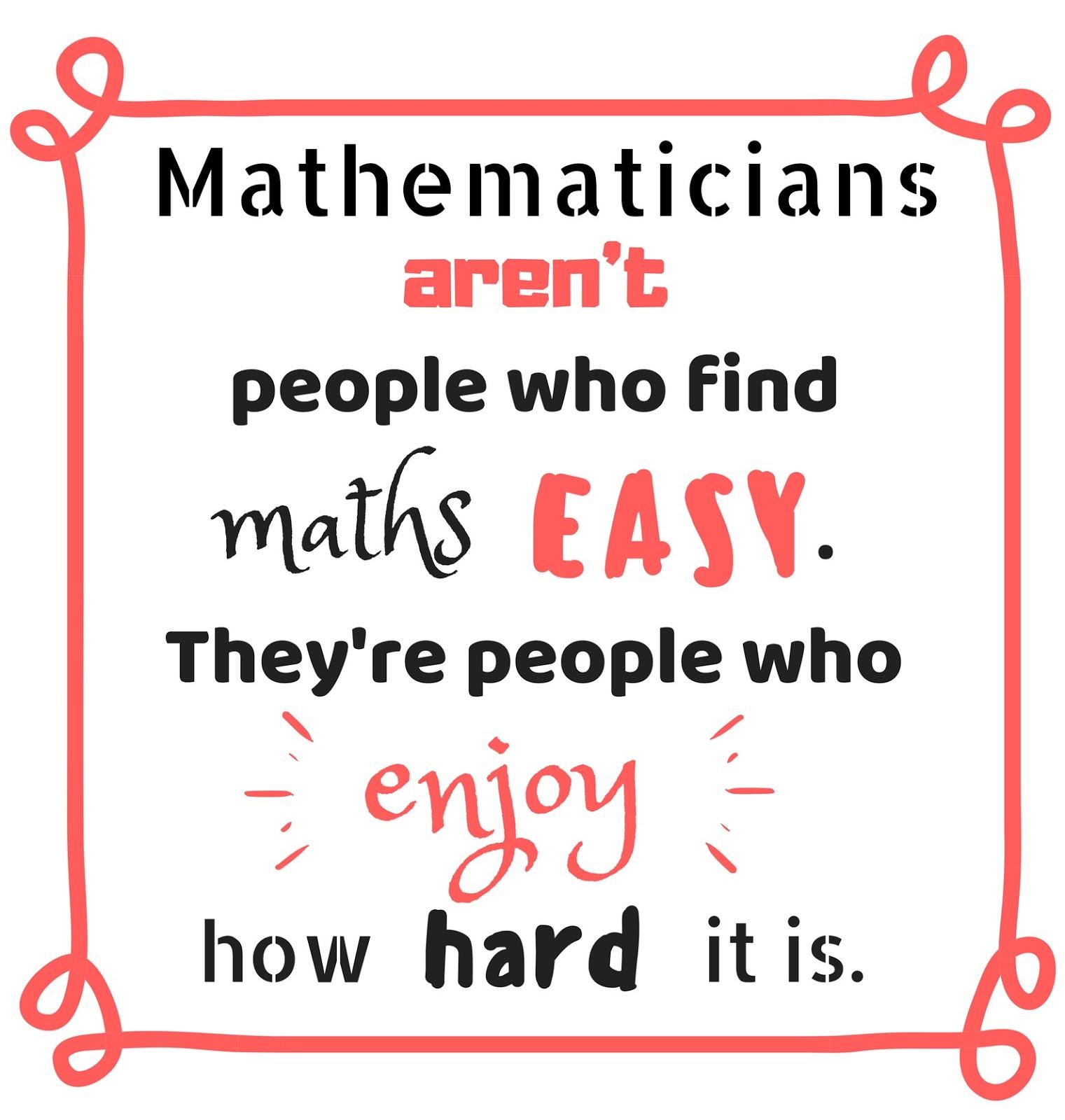
Mathematics is a creative and highly inter-connected discipline that has been developed over centuries, providing the solution to some of history’s most intriguing problems. It is essential to everyday life, critical to science, technology and engineering, and necessary for financial literacy and most forms of employment. A high-quality mathematics education therefore provides a foundation for understanding the world, the ability to reason mathematically, an appreciation of the beauty and power of mathematics, and a sense of enjoyment and curiosity about the subject.
National Curriculum 2014
Aims:
In Melling Primary we are ambitious for our learners and we follow the National Curriculum 2014 programmes of study for Mathematics. The Melling Approach to Mathematics aims to ensure that all pupils:
- become fluent in the fundamentals of mathematics, through varied and frequent practice with increasingly complex problems over time, so that pupils develop conceptual understanding and the ability to recall and apply knowledge rapidly and accurately;
- reason mathematically by following a line of enquiry, suggesting relationships and generalisations, and developing an argument, justification or proof using mathematical language;
- can solve problems by applying their mathematics to a variety of routine and non-routine problems with increasing sophistication, including breaking down problems into a series of simpler steps and persevering in seeking solutions.
- realising that there are sometimes more than one method to finding a solution to a problem
- know that there is sometimes more than one answer to a problem or an investigation
- enjoy working mathematically and meeting the challenges it brings
- understand how Mathematics and Numeracy is important in everyday life.
Our high-quality teaching approach:
Mathematics is an interconnected subject in which pupils need to be able to move fluently between representations of mathematical ideas. The Melling Approach is, for organisational purposes, split into several elements (seen below), but pupils are encouraged to make rich connections across mathematical ideas to develop fluency, mathematical reasoning and competence in solving increasingly sophisticated problems. They will also apply their mathematical knowledge to science and other subjects where appropriate.
MASTERY:
The expectation is that the majority of pupils will move through the programmes of study at broadly the same pace. However, decisions about when to progress should always be based on the security of pupils’ understanding and their readiness to progress to the next stage. Pupils who grasp concepts rapidly will be challenged through being offered rich and sophisticated problems before any acceleration through new content. Those who are not sufficiently fluent with earlier material will consolidate their understanding, including through additional practice, before moving on.
EYFS – Strong foundations in the Early Years:
In Melling we appreciate that Mathematics plays a key role in a child’s development. Very young children are naturally curious, noticing differences in quantity and the shape of objects. They use early mathematical concepts when they play. Mathematical understanding helps children make sense of the world around them, interpret situations, and solve problems in everyday life. This could be talking about objects, sharing amounts with their peers, or counting in play. Developing a sound understanding of maths when we are young is essential. If children have a good early mathematical understanding they are more likely to do better later in school. It is also connected to their educational progress, and life outcomes. We make use of the NCETM programme and Whiterose Maths for Early Number Development and these are used on a daily basis to structure a Maths curriculum based on the following key principles:
Coherence: Teaching is designed to enable a coherent learning progression through the curriculum, providing access for all pupils to develop a deep and connected understanding of mathematics that they can apply and communicate in a range of contexts.
Representation and Structure: Teachers carefully select representations of mathematics to expose mathematical structure. These representations become mental images that children can use to think about and discuss mathematics, supporting them to achieve a deep understanding of mathematical structures and connections.
Mathematical Thinking: Mathematical Thinking is central to how pupils learn mathematics and includes looking for patterns and relationships, making connections, conjecturing, reasoning, and generalising. The language used is essential to developing deep understanding.
Fluency: Efficient, accurate recall of key number facts and procedures is essential for fluency, freeing pupils’ minds to think deeply about concepts and problems, but fluency demands more than this.
Our approach to the curriculum:
The Daily Mighty Maths session (fluency):
In every year group from YR to Y6 a daily ‘Mighty Maths’ session will take place to provide an opportunity for children to develop fluency and accuracy when dealing with mental Maths. The elements of the session may include: counting at the level appropriate to year group expectations (forwards and backwards, starting at any given number); quick and accurate recall of number bonds and multiplication tables; practice of a mental strategy; an activity to consolidate place value of numbers appropriate to the year group.
Four a Day (fluency):
In each class from Y1 to Y6 (YR – Summer term), ‘Four a Day’ regular and frequent written calculation practice of the operations will take place. This provides an opportunity for children to consolidate and embed written calculation methods taught in Maths lessons. The expectation for each year group can be seen in the ‘Written Calculations’ Policy. When learning a new method, the focus might be on just one aspect of calculation such as division. Questions may also include missing number calculations.
Basic Skills Weekly session (revisit and revision):
All Key Stage 2 classes have a weekly Basic Skills session. This provides an opportunity to maintain an overview of the breadth of the programme of study for the year group. Children work through a series of short, sharp focused questions/problems/challenges from a range of elements eg place value, calculations, shape, measure, time – allowing for links to be made and also allowing for concepts, skills and methods from a range of mathematics to be recalled, remembered and consolidated. An independent test is completed every half term to monitor progress being made and areas which need further consolidation.
Number Bond/Times Tables Passports (fluency):
Starting in Y1 with Number Bonds, progressing to Y6 number bonds and multiplication tables; all children work their way through progressive passports (bronze, silver and gold level for each set of year group expectations). Children are tested on a weekly basis. Progress is tracked and recorded. Checks have been introduced at the start of a new academic year to ensure facts are well embedded and remembered from previous years’ expectations. Children are encouraged to learn and be tested on multiplication tables facts from Y2 and our aim is to have most children with a good recall of all facts up to 12 x 12by the end of Y3. Further consolidation of these facts may be needed in Y4, when children will be tested nationally at the end of the year. All children have access in school and at home to TT Rockstars, an interactive and personalised programme of learning to help them learn their tables facts.
The daily Maths lesson:
All children have access to a daily Mathematics lesson. As The Melling Approach to Mathematics has a range of elements, as noted above, the daily Maths lesson can then focus on new teaching, reasoning using newly acquired knowledge, embedding language and problem solving. Whiterose Maths is our chosen scheme of work that ensures a progressive, structured approach to developing Mathematical concepts from YR to Y6.
Cross curricular Maths:
Where other subjects allow (and require it), Mathematics is used and applied. The main subjects for cross curricular Mathematics are Science, Geography, DT and Computing.
Oracy & the language of Mathematics:
In Melling we have identified that our children sometimes struggle with the language of Mathematics and therefore we try to incorporate as many oracy related learning activities into our teaching:
- TOLD - Talk guidelines provide Opportunities to make Links, and initiate Debate.
- Modelling Thinking: Teachers use "think aloud" strategies to model their own reasoning step-by-step, explaining how they select strategies or correct misconceptions
- Sentence Stems: Structured sentence starters helps children articulate reasoning and build on others' ideas
- Exploratory Talk: We move beyond simple answers to encourage "talk-rich" classrooms
- Participation and Routine: Teachers establish talk guidelines and routines from the beginning to ensure all pupils, including those disadvantaged, engage
Diagnostic assessment:
Passports: Children will be tested/quizzed on a weekly basis in order to track and identify gaps in number bond and times table knowledge.
Basic Skills: Children in all Key Stage 2 classes will have half-termly diagnostic assessments of their Basic Skills knowledge of age related expectations. The gaps then inform the subsequent lessons.
Arithmetic: On a termly basis, Y2 - Y6 will have an arithmetic test either based upon previous SATs tests (Y2 and Y6) or an NFER test. Y1 take an NFER arithmetic test in the Spring and Summer term. Assessment previous to that is teacher assessment in Y1. In YR assessments are referenced to the on entry baseline and then Early Years Goals.
Reasoning: On a termly basis, Y2 - Y6 will have a reasoning test either based upon previous SATs tests (Y2 and Y6) or an NFER test. Y1 take an NFER reasoning test in the Spring and Summer term. Assessment previous to that is teacher assessment in Y1.
Assessments are recorded and tracked and used to inform future planning and identify trends in terms of strengths and areas for development.
Statutory assessment:
EYFS: All children are assessed against Early Learning Goals
Y4 Multiplication Check: In Year 4 children are assessed in the Summer term on their knowledge of Multiplication Tables to 12 X 12. This is an online assessment and is timed.
Y6 Statutory Assessments (SATs): In Year 6 all children (who have accessed the Y6 curriculum) are assessed. The assessment consists of three papers: Arithmetic; Reasoning 1 and Reasoning 2.
Achievement:
|
MELLING PRIMARY – ACHIEVEMENT IN MATHEMATICS |
||||||
|
|
2023 |
2024 |
2025 |
|||
|
ALL CHILDREN |
Expected |
Higher |
Expected |
Higher |
Expected |
Higher |
|
90% |
23% |
93% |
43% |
91% |
16% |
|
|
DISADVANTAGED |
71% |
- |
100% |
- |
89% |
11% |
|
MELLING PRIMARY – ACHIEVEMENT IN MULTIPLICATION CHECK Y4 |
|||
|
Av score/25 |
2023 |
2024 |
2025 |
|
ALL CHILDREN |
23 |
24.4 |
23 |
Inclusion:
Adaptive Teaching: At Melling Primary, the main body of teaching is aimed at enabling the vast majority of pupils to access and accommodate concepts, skills and methods at an age related expectation. Children identified as SEND may have a tailored Maths curriculum that incorporates some aspects of age related expectations but will also incorporate vital concepts from previous year groups that have not been fully grasped. Children with SEND that impacts on their learning of Mathematics, will participate in whole class lessons, but may also have some time to work with an adult in a smaller group.
In order to enable children of all abilities to access the broad and balanced Mathematics curriculum, teachers may use a variety of approaches that help children move from the concrete stage (ie using objects, ‘manipulatives’, apparatus and equipment to aid understanding), to the pictorial (representing a concept using diagrams, pictures or symbols) to the abstract (when a concept is embedded securely and can be applied to other contexts).
Intervention: All children, at some point, may experience a difficulty with a particular mathematical concept and so may require some additional intervention. Because feedback is given on a daily basis, misconceptions or difficulties in understanding will be identified very early on with an aim to address it as soon as possible. Children will be given additional teaching in a small group or in a one to one situation so that barriers can be dealt with and learning can continue.
It is also recognised that there will be some children who achieve at a much greater depth and at a much quicker rate than other children. For these children, activities will be provided that challenge – requiring children to use their newly acquired knowledge at a much greater depth, developing skills of reasoning, application, problem solving and investigation. It is also recognised that some children may not acquire concepts at the same expected rate as others – a range of ‘keep up’ as well as ‘catch up’ interventions will be provided.
Home learning - 'own work'
YR children are encouraged to learn number bonds to 10 and to talk about early number concepts with their parents. Numberbots is an effective online learning platform that supports concept development.
Y1 and Y2 children are encouraged to learn higher number bonds. This includes number bonds up to and including 20. For example children may be asked to find all the different combinations of two different numbers which add up to 16. They will also have Maths homework set, which may include home tasks using the online programmes Numberblocks and TT Rockstars
Y3, Y4, Y5 children are encouraged to practise number bonds to 100 and decimal bonds; multiplication tables and also have home tasks set using the online programme – Mirodo and TT Rockstars
Y6 children have regular and frequent homework set from class text books; past SATs papers and revision booklets; they continue to refine and apply their knowledge of number bonds and multiplication tables.
Maths - what does it look like in each year group?
- LEARNER PROFILE OF A MATHEMATICIANPDF File
- YEAR 1 MATHEMATICSPDF File
- YEAR 1 MATHS WORD CLOUD CURRICULUM CAPTURE.pdfPDF File
- YEAR 3 MATHEMATICSPDF File
- YEAR 3 MATHS WORD CLOUD CURRICULUM CAPTURE.pdfPDF File
- YEAR 4 MATHEMATICSPDF File
- YEAR 4 MATHS WORD CLOUD CURRICULUM CAPTURE.pdfPDF File
- YEAR 5 MATHEMATICSPDF File
- YEAR 5 MATHS WORD CLOUD CURRICULUM CAPTURE.pdfPDF File
- YEAR 6 MATHEMATICSPDF File
- YEAR 6 MATHS WORD CLOUD CURRICULUM CAPTURE.pdfPDF File
- YEAR 2 MATHEMATICSPDF File
- YEAR 2 MATHS WORD CLOUD CURRICULUM CAPTURE.pdfPDF File
- MATHEMATICS ROADMAP THROUGH KEY CONCEPTS SUMMARYPDF File
- MATHEMATICS ROADMAP THROUGH KEY CONCEPTS YEAR GROUPSPDF File
- MATHEMATICAL VOCABULARY YEAR BY YEAR.pdfPDF File